
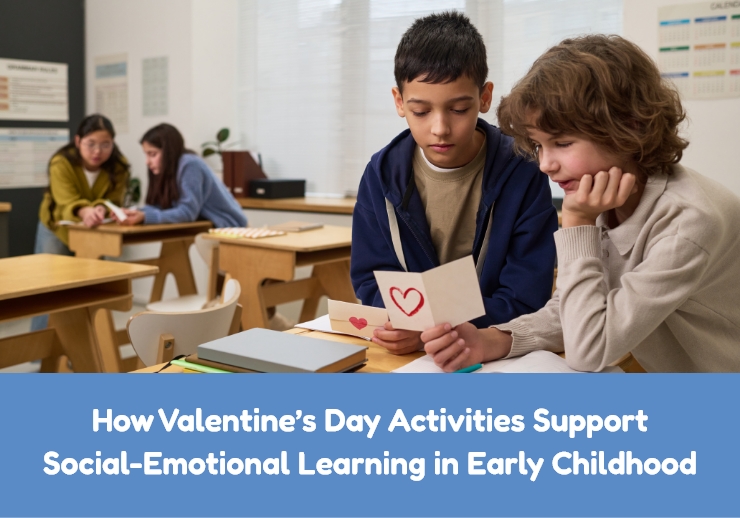
Valentine’s Day in early childhood education is about far more than cards, candy, and cute decorations. When approached thoughtfully, Valentine’s Day activities can play an important role in supporting social-emotional learning (SEL), helping young children build the skills they need to understand emotions, form healthy relationships, and interact positively with others.
Social-emotional learning in early childhood focuses on helping children recognize their feelings, manage emotions, show empathy, and develop strong social connections. These foundational skills directly influence a child’s ability to succeed in school and in life. Valentine’s Day offers a natural, age-appropriate opportunity to reinforce these lessons in a way that feels fun and meaningful.
Encouraging Emotional Awareness
Many Valentine’s Day activities invite children to talk about feelings such as happiness, kindness, and appreciation. Simple conversations about why we give cards or say kind words help children begin to identify emotions in themselves and others. For young learners, naming emotions is a critical first step in emotional development. When teachers and caregivers model language like “kind,” “happy,” or “thankful,” children start to build an emotional vocabulary they can use year-round.
Building Empathy and Kindness
Valentine’s Day emphasizes caring for others, which directly supports empathy development. Activities such as making cards for classmates or practicing kind words encourage children to think beyond themselves. These moments help children understand that their actions can positively affect how others feel. Over time, this awareness strengthens compassion and kindness, both essential components of social-emotional learning.
Practicing Social Skills
Group Valentine’s Day activities give children opportunities to practice important social skills like sharing, taking turns, and cooperating. Whether children are passing out cards or working together on a craft, they are learning how to interact respectfully with peers. These interactions help children navigate friendships and resolve minor conflicts in healthy ways.
Supporting Positive Peer Relationships
Early learning environments play a key role in shaping how children relate to others. Valentine’s Day activities focused on friendship rather than exclusivity help reinforce inclusivity and belonging. When children participate in activities that celebrate everyone, they learn that kindness is something we show to all, not just a few people. This supports a classroom culture where children feel safe, valued, and connected.
Reinforcing Emotional Regulation
Exciting holidays can bring big emotions, especially for young children. Valentine’s Day provides an opportunity for educators to help children manage excitement, disappointment, or frustration in age-appropriate ways. Through guided activities and calm routines, children learn strategies for regulating their emotions, an essential SEL skill.
Extending Learning Beyond the Holiday
The lessons children learn during Valentine’s Day activities can extend far beyond a single day. When educators connect these experiences to everyday classroom routines, children begin to understand that kindness, empathy, and emotional awareness are part of daily life. This consistency helps reinforce social-emotional learning throughout the year.
By using Valentine’s Day as a teaching tool, early childhood programs can support emotional growth while creating positive, memorable experiences for children. These early lessons in empathy, communication, and connection help lay the foundation for healthy relationships and lifelong emotional well-being.
Learn More About Our Programs
Help your child build confidence, empathy, and strong social skills in a nurturing early learning environment. At Youthland Academy, we create meaningful experiences that support social-emotional growth every day. Learn more about our programs and schedule a tour today.
